Case Study: State Healthcare Agency Migrates FileNet Optical Data to OnBase in 8 Weeks
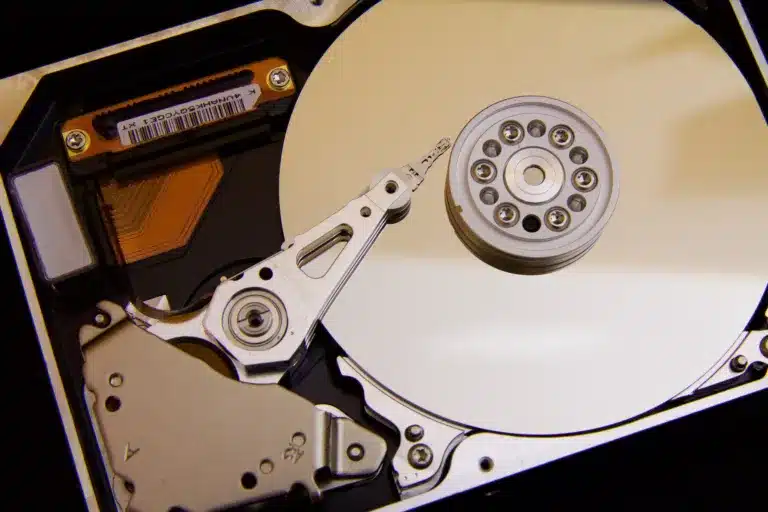
A state healthcare agency needed to retire a legacy FileNet Image Services environment built on aging optical storage - including 12” and 5¼” platters.
This was more than a technology upgrade. It was a risk mitigation effort tied directly to patient records, compliance, and operational continuity.
Critical healthcare documents were stored on obsolete media. Annotation data was essential to workflows and decision-making. At the same time, the agency had limited visibility into its FileNet indexing structures and annotation usage.
All of this had to be addressed within a compressed timeline to support a broader enterprise ECM initiative built on an on-premise Hyland OnBase platform.
Replacing the system was only part of the challenge.
Understanding and accurately converting the data was where failure was most likely.
The Challenge: Optical Storage, Annotations, and Unknowns
The FileNet environment relied on OSAR optical storage - a legacy technology that is increasingly difficult to access, support, or migrate without specialized expertise and equipment.
The data itself introduced additional risk:
- Undocumented or inconsistent document classes and index fields
- Annotation types critical to healthcare processes
- Limited reporting on annotation volume and usage
- High sensitivity of patient-related records
Any loss of annotation data or misalignment of metadata would directly impact users and compliance requirements.
The Approach: Clarity Before Conversion
Working alongside a nationwide OnBase reseller, 4matix led a structured analysis and migration effort designed to eliminate uncertainty before execution.
1. FileNet Structure Analysis
4matix analyzed document classes and index structures within FileNet Image Services to define how content should be represented in OnBase. This process addresses and merges the needs of the legacy indexing structures with those setup for day forward operations. When the legacy index structures don't quite fit - they are modified to conform to the new structure without compromising their intent.
This ensured accurate mapping to OnBase document types and keyword schemas, reducing confusion and rework post-migration.
2. Annotation Discovery and Mapping
Annotations were treated as mission critical data.
4matix identified, categorized, and quantified all annotation types, documenting how they were used and how they needed to function in OnBase. This step was critical in a healthcare setting where annotations often contain review notes, approvals, and contextual information tied to patient records.
3. Optical Data Extraction
Using specialized homegrown processes and tools, 4matix extracted documents and metadata from FileNet tranlog platters.
This eliminated reliance on failing hardware while ensuring complete data capture from legacy storage.
4. Conversion, Testing, and Validation
Documents and annotations were converted into OnBase-ready formats, followed by detailed validation and verification reporting.
A successful Data Interchange Test confirmed that all data - including annotations - would function correctly within the on-prem OnBase environment before full migration began.
The Outcome: 4 Million Documents Delivered in 8 Weeks
Following validation, 4matix converted and delivered over 4 million FileNet documents, fully prepared for ingestion into the agency’s OnBase system.
The entire project was completed in just under 8 weeks.
Key results included:
- Complete migration off legacy optical media
- Full preservation of annotation data as live, usable OnBase annotations
- Accurate alignment of FileNet metadata with OnBase structures
- Zero data ambiguity and no annotation loss
- Met all ECM replacement and go-live timelines
Why This Matters
Healthcare organizations running FileNet Image Services on optical media face a unique combination of risks - aging infrastructure - enhanced maintenance costs - and limited market resources to draw upon.
The failure point in these projects is rarely the platform.
It’s the data.
This project demonstrates a more effective approach:
- Analyze before migrating
- Treat annotations as critical, not optional
- Validate everything (binary file interrogation - md5 hashes throughout the workflow - no zero byte of corrupt files) before full-scale execution
- Move quickly without sacrificing accuracy
If you’re still operating FileNet Image Services - especially on optical storage - or if you don’t have a clear understanding of your annotation data - we can help you transition to a modern platform while keeping all your data and data intent intact.
4matix helps healthcare organizations migrate FileNet to OnBase and other platforms - preserving data integrity, annotations, and operational continuity.
4matix Contact:
David Blackburn
VP Sales
dblackburn@4matix.com
For more information about our FileNet Conversion offerings please visit:FileNet Conversions and Migrations!
All trademarks, trade names, and logos mentioned or used in this context are the property of their respective owners.